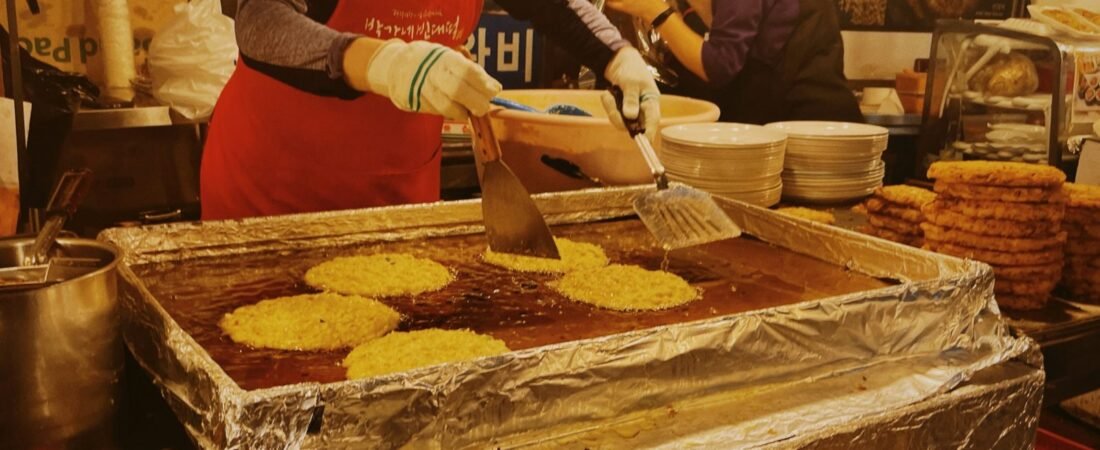
You’ve seen it on Netflix or Instagram — the griddles of sizzling mung-bean pancakes, the “drug” gimbap, the lady hand-cutting noodles. Gwangjang Market is the most famous traditional market in Seoul, and yes, you should go. But here’s the part the food videos leave out: Gwangjang has a real, well-documented problem with overcharging foreigners, and it has been in the Korean news more than once. The good news is that one simple rule keeps you almost entirely out of it. Let me explain the market the way a local would, then show you exactly how to eat well here.
What Gwangjang actually is
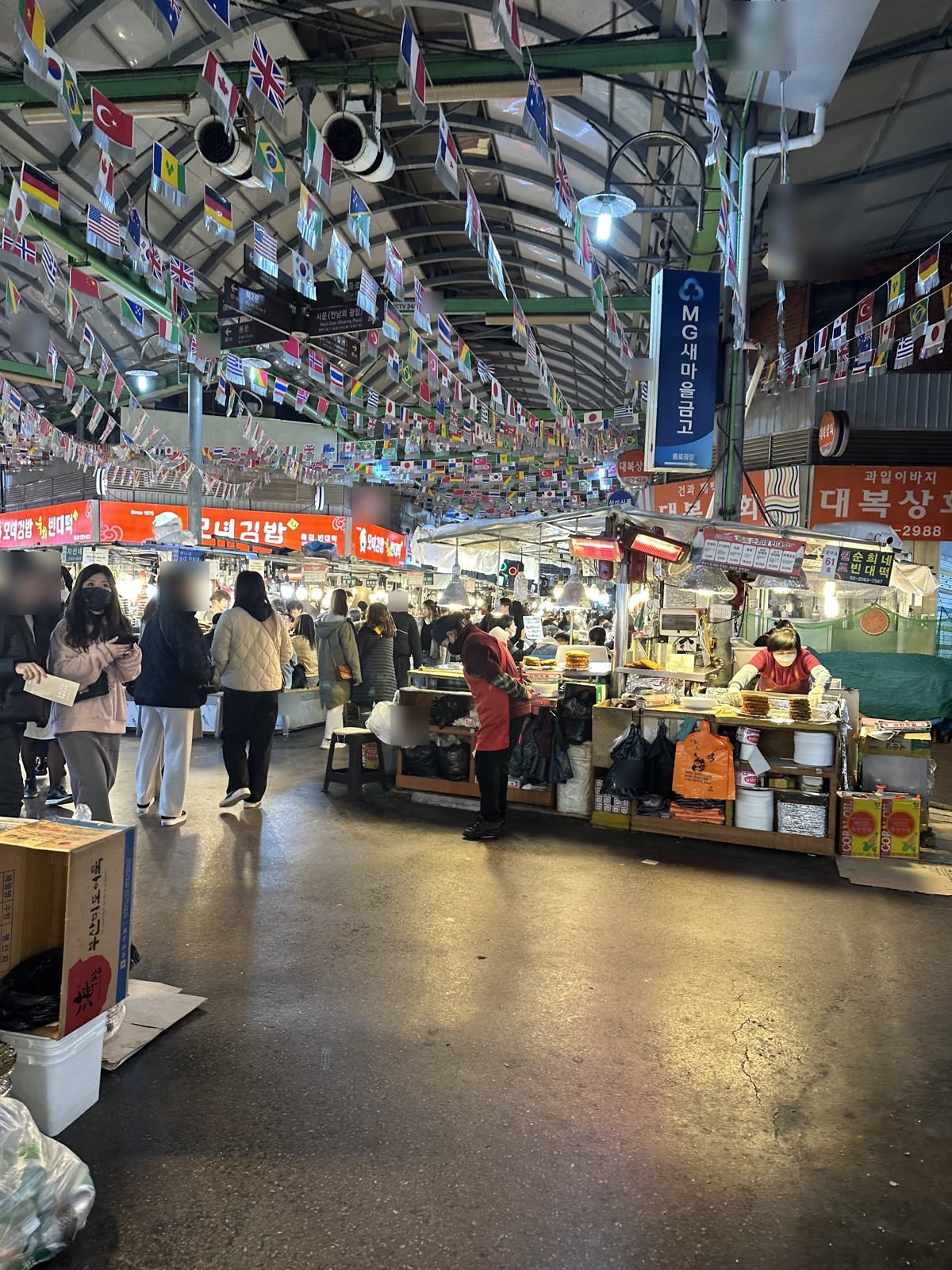
Until fairly recently, Gwangjang wasn’t a tourist place at all. It was where Koreans came to buy fabric and secondhand clothes upstairs — the second-floor lanes are still full of vintage-clothing shops — and to eat and drink downstairs. For decades it was a kind of living room for older Seoulites: the men who spent their afternoons playing baduk and janggi over at Tapgol Park would wander a few minutes down the road for a cheap mung-bean pancake and a bowl of makgeolli.
Seoul used to have dozens of loud, lively markets like this. Most faded once big supermarkets opened in every neighborhood and shoppers drifted away — put off by the weather, the cash-only stalls, and hygiene worries. Only a handful of landmark markets survived, and Gwangjang is the biggest. Part of why it lasted: it’s indoors, so you can eat your pancakes in pouring rain or snow, and it sits in the middle of everything — about a 10-minute walk from the Dongdaemun shopping malls, and the same from Insadong. For a first taste of real Korean market culture, there still isn’t a better-placed spot in the city.
Getting there
- Closest: Jongno 5-ga Station (Line 1), Exit 8 — about a one-minute walk.
- Also an easy 8–10 min walk: Euljiro 4-ga (Lines 2 & 5, Exit 4), Jongno 3-ga (Lines 1/3/5), and Dongdaemun (Lines 1 & 4). So you can fold it into a stroll through Insadong or a Dongdaemun shopping run.
- Hours: the food alley runs roughly 9am to 11pm, every day. (The fabric and hanbok sections close around 6pm and on Sundays.) After about 10pm the cloth stalls shut and the food alley takes over completely.
- When to go: a weekday late morning (around 10–11:30) is the calm window. Avoid weekend lunchtime (roughly 12–3pm) — that’s when it’s shoulder-to-shoulder and the famous stalls have lines fifty deep.
The overcharging problem — and the one rule that beats it
This is the part to read before you go. Gwangjang’s fame has a dark side: a small number of vendors have been caught overcharging foreigners, and it has blown up on YouTube and in the Korean press repeatedly (a viral sundae video in late 2025, a “₩2,000 for a cup of water” case in April 2026). The tricks are almost always the same three:
- Adding food you didn’t order and charging for it — quietly “upgrading” an ₩8,000 plate into a ₩10,000 one without asking.
- Tiny portions for the price — small servings that make a mockery of the market generosity Korea is supposed to be known for.
- Pushing cash — refusing cards or steering you to cash. Korean law does require card-registered businesses to accept cards, but many of Gwangjang’s open stalls aren’t registered card merchants at all — they’re simply cash-only, and pushing cash lets them under-report sales and dodge tax. So “they legally have to take my card” won’t help you at a noodle cart — just bring cash.
Here’s the rule, and it’s the single most useful thing in this whole guide:
Eat at the fixed-price shops along the sides — not the open stalls in the middle.
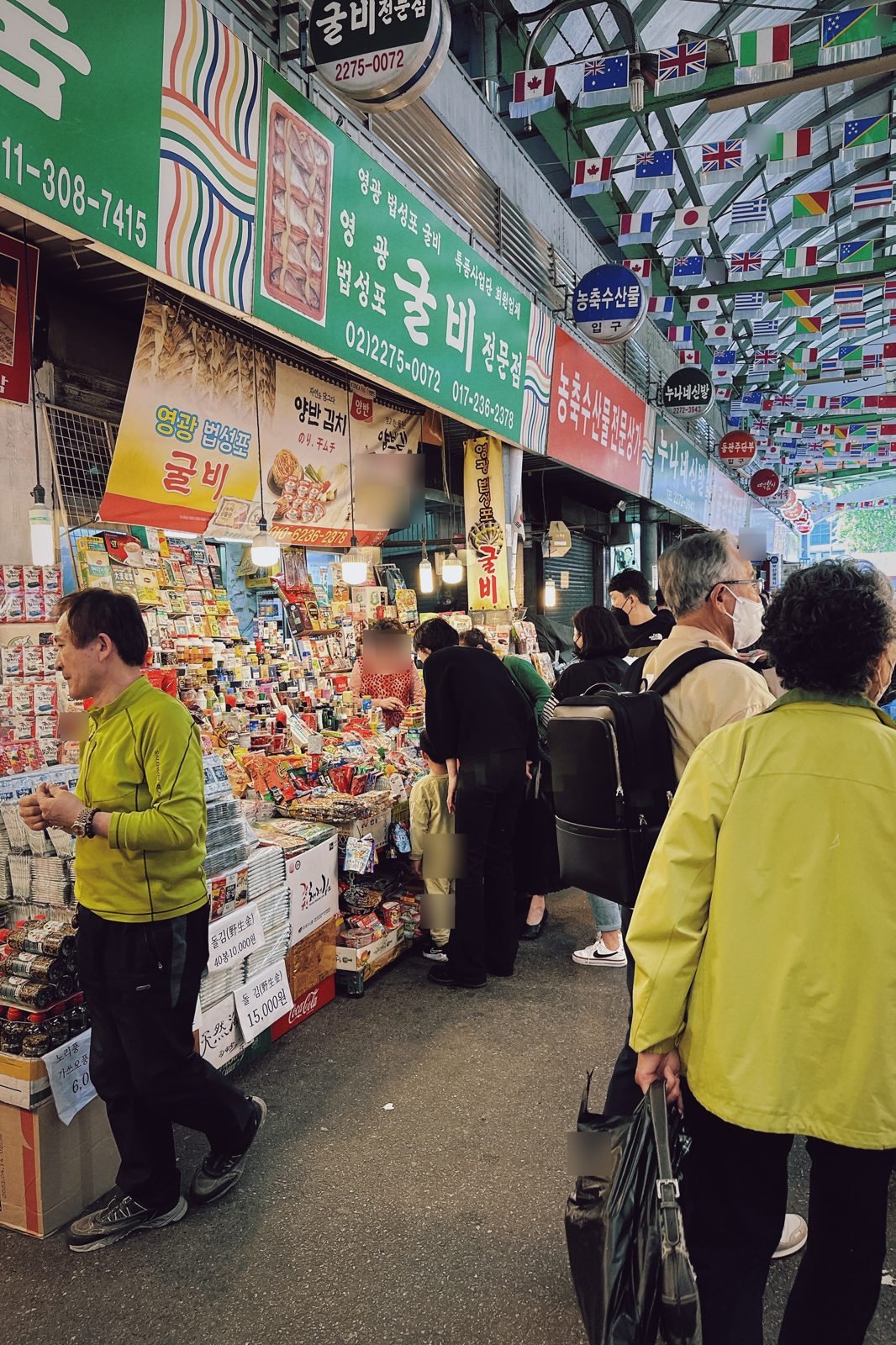
Gwangjang has proper shops lining the edges of each lane, and a crush of open-air stalls (pojangmacha) running down the center. Almost every overcharging story has come from the open center stalls. The real tell is posted prices: the side shops put a menu and prices on the wall and stick to them, while the problem stalls quote you a verbal total with nothing posted. If you specifically want that steamy, elbow-to-elbow stall atmosphere, that’s your call — but if you want to be sure you’re treated fairly, sit down at a fixed-price shop. Beyond that, the simplest insurance is to order something cheap, confirm the price out loud before they start cooking, and treat the visit as atmosphere first, feast second.
What to eat
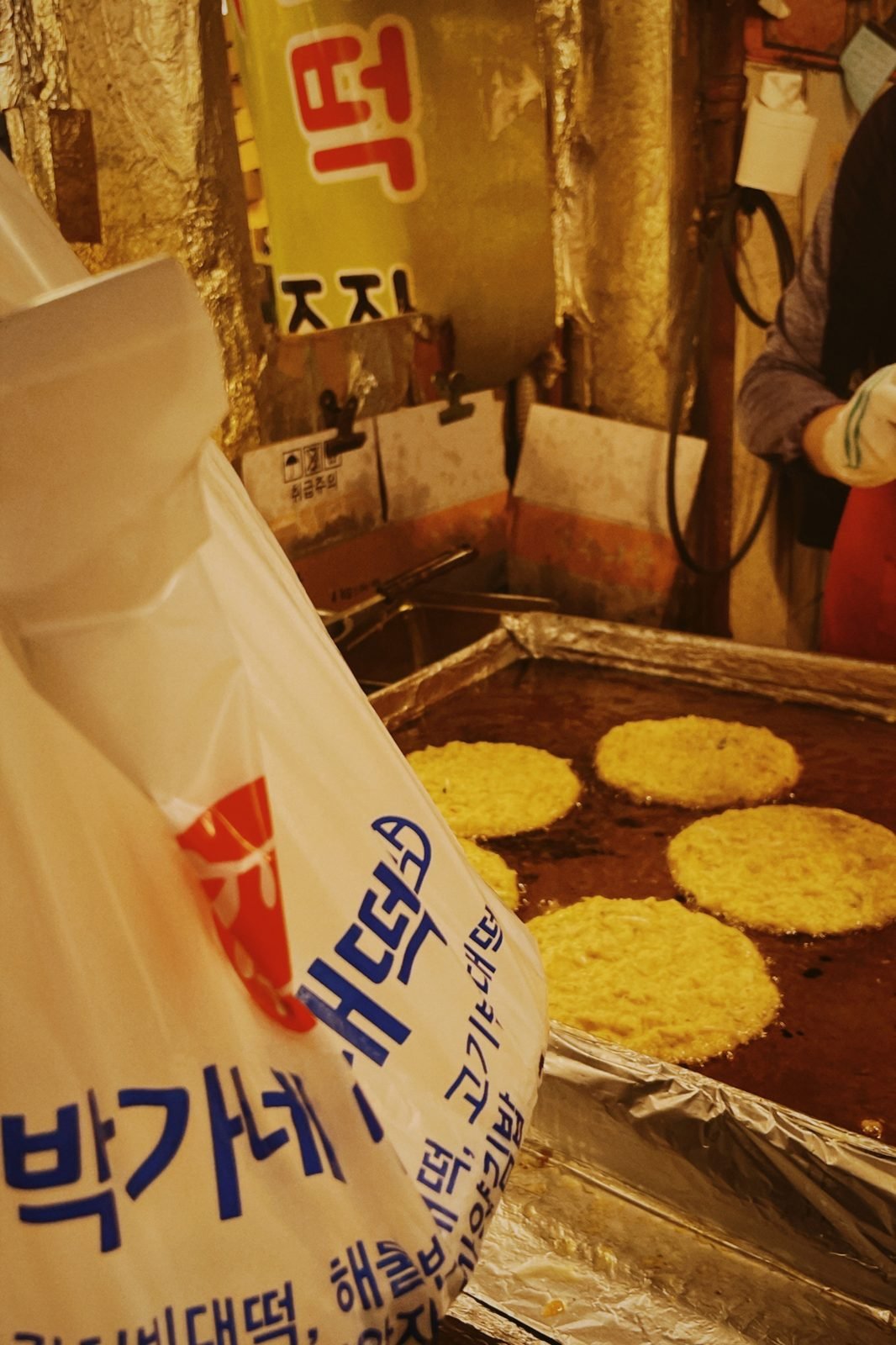
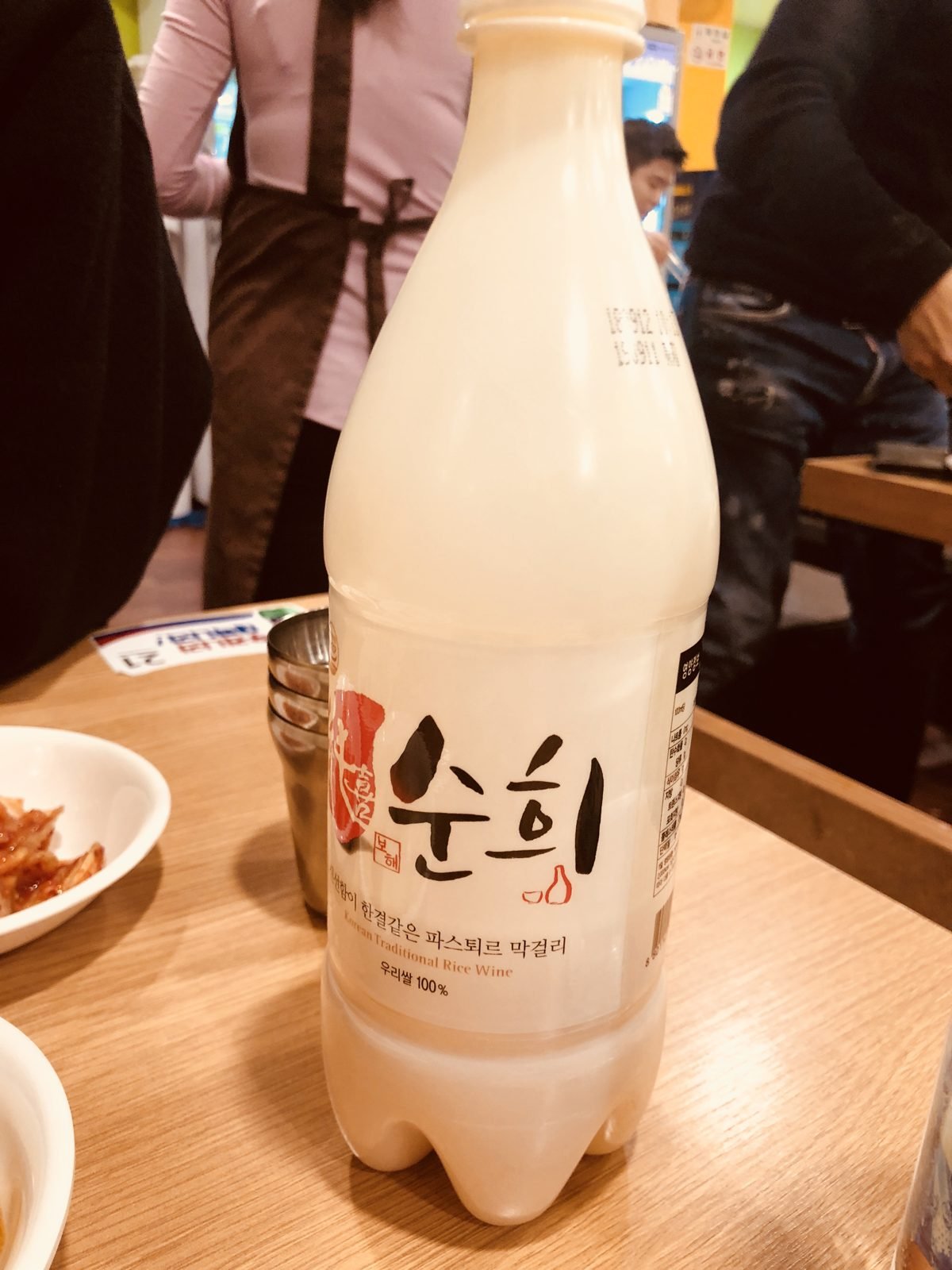
- Nokdu bindaetteok (mung-bean pancake). The market’s signature: stone-ground mung beans fried crisp at the edges, eaten with makgeolli. Around ₩5,000–6,000. Good news — they’re all good, so don’t queue for one specific stall.
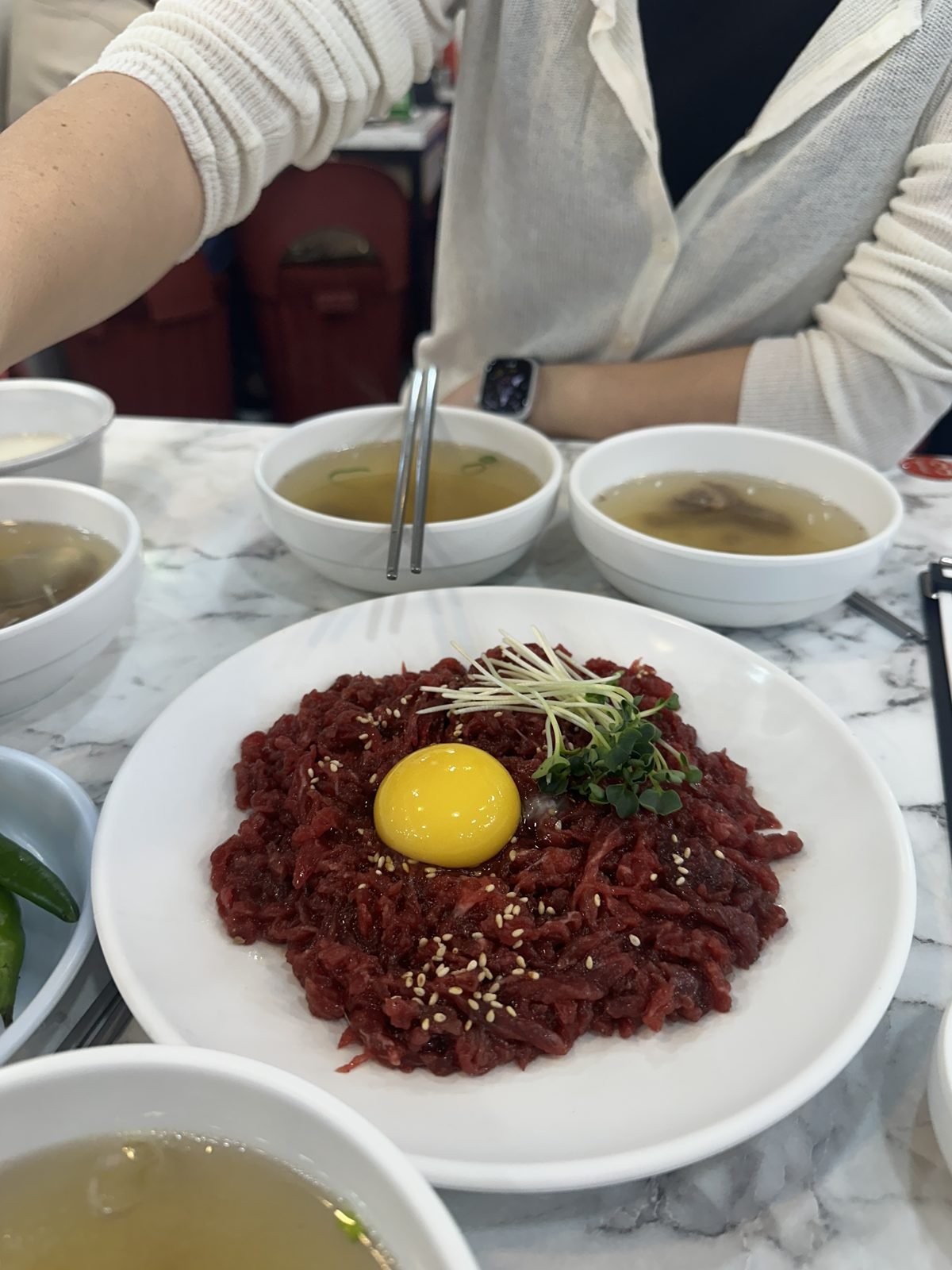
- Yukhoe (raw beef). Korean beef tartare: fresh raw beef in sesame oil, often with an egg yolk and slivered pear. There’s a whole Yukhoe Alley near Exit 8; Buchon Yukhoe has been a Michelin Bib Gourmand pick for years. Plain yukhoe runs around ₩20,000.
- Tangtangi (live octopus). Octopus chopped fresh — and still moving. The pieces wriggle and the suckers grip the inside of your mouth, which some travelers find a bit much. But if you’re the curious type, it’s exactly the kind of dare that makes a trip memorable. (Chew well, eat slowly.)
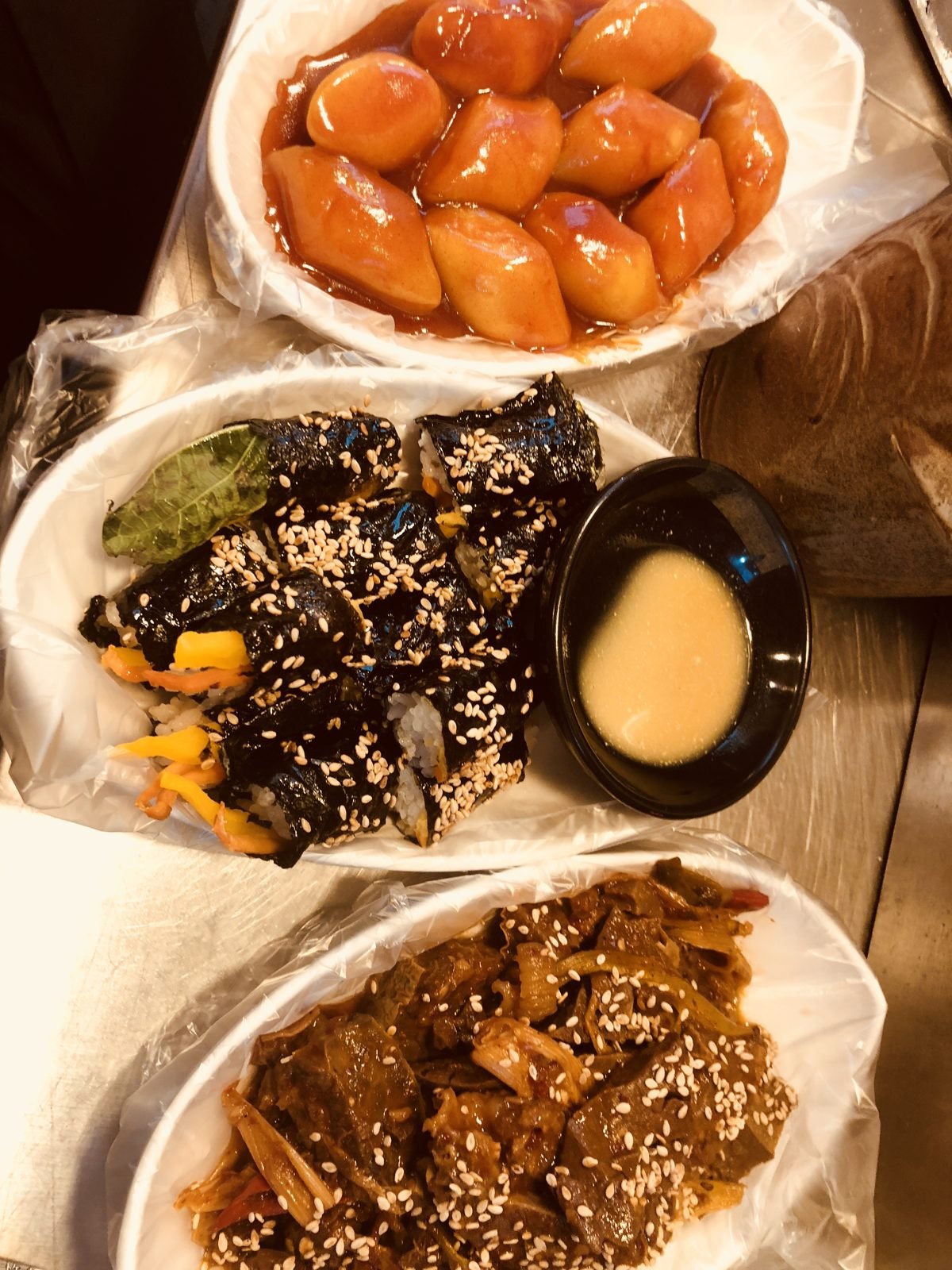
- Mayak gimbap (“drug” gimbap). Thumb-sized seaweed rolls with a hot-mustard dip, “addictive” enough to earn the nickname. About ₩5,000–6,000 a serving.
- Son-kalguksu (hand-cut noodles). Around ₩7,000. One myth to bust: the stall made famous by Netflix’s Street Food: Asia is the kalguksu stall (Gohyang Kalguksu), not a pancake stall — and honestly, the 30-minute line isn’t worth it when five comparable noodle stalls sit within 20 meters.
Prices move — treat these as ballpark and check the posted price on the day.
Cash and cards
Bring cash. Card machines were installed at most stalls back in 2024, but plenty of vendors still wave them off (“machine’s broken / cash only / bank transfer”), so don’t count on plastic at the stalls. Foreign cards, Kakao/Naver Pay, and T-money are not reliable here. Carry ₩50,000–100,000 in small bills (₩1,000s and ₩10,000s). There are ATMs at the market entrances — for a foreign card use one labeled “Global ATM” (it’ll show the Visa/Mastercard logos), and pull your cash before you sit down to eat.
Is it worth it? (and where to go instead)
Yes — as a 30-to-60-minute taste of Korean market life, not a pilgrimage. Go at an off-peak hour, eat a bindaetteok and a shared plate of yukhoe, skip the Netflix line, confirm your prices, and you’ll have a genuinely good time. If you’d rather a calmer, more local market with less of the tourist-pricing reputation, Mangwon Market or Tongin Market (famous for its little brass-coin lunchbox system) are the better picks — and increasingly what locals themselves recommend.
Getting around to any of them is easiest with Naver Map and a T-money card.
Read next: those green bottles on every table? Here’s why soju looks like that. Got a full day left in Seoul? Everland or Lotte World — pick the right park.
FAQ
Is Gwangjang Market a tourist trap?
Not exactly — but it has a real overcharging problem at the open stalls in the center. Eat at the fixed-price shops along the sides, check prices before you order, and you’ll be fine.
What should I eat at Gwangjang?
The classics are mung-bean pancake (bindaetteok), raw beef (yukhoe), and “drug” gimbap (mayak gimbap). Try tangtangi (live octopus) if you’re feeling adventurous.
Do I need cash?
Yes. Bring ₩50,000–100,000 in small bills — many stalls won’t take cards, and foreign cards rarely work at the stalls.
When is the best time to go?
A weekday late morning (10–11:30am) or the evening. Avoid weekend lunch, when it’s packed.
How do I get to Gwangjang Market?
Jongno 5-ga Station (Line 1), Exit 8 — about one minute away. It’s also a 10-minute walk from Insadong or Dongdaemun.
Read next: if you’re here in July or August, read what Korean summer is actually like before you plan a full day outdoors.