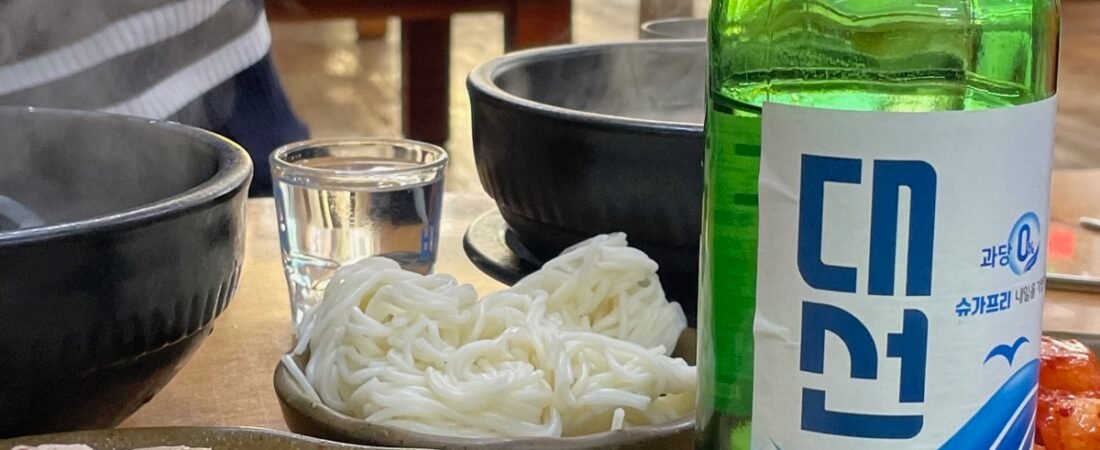
It gives you away as a newcomer every time: the small green bottle lands on your table, and for a second you have no idea what to do with it.
Walk into almost any Korean restaurant and it’s already there. A sunlit lunch spot with boiled pork and a tangle of noodles. A smoky street grill at midnight. A red plastic tent on a side street, its windows fogged with steam. The bottle shows up before you’ve decided anything — and the part most guides skip is that soju was never really about the drink. It’s about the table it sits on.
So don’t worry about memorizing labels or hunting for the “best” bottle. You need two things: what you’ll actually see, and what to eat next to it. Let me walk you through it the way I would for a friend landing for the first time.
The green bottle — and how it changes as you travel
The names you’ll meet first are Chamisul and Jinro (both from HiteJinro, one of Korea’s biggest makers) and Chum-Churum (Lotte Chilsung’s main line). In Seoul, those three cover most tables.
Travel south, though, and the green bottle quietly changes its name. In Busan you’ll see Daesun (대선); on Jeju Island it’s Hallasan; around the southern provinces you’ll run into local favorites like Good Day or C1. Same green glass, same small glasses beside it — different hometown. Nobody expects you to know them all. It’s just a nice sign you’ve left the tourist track.
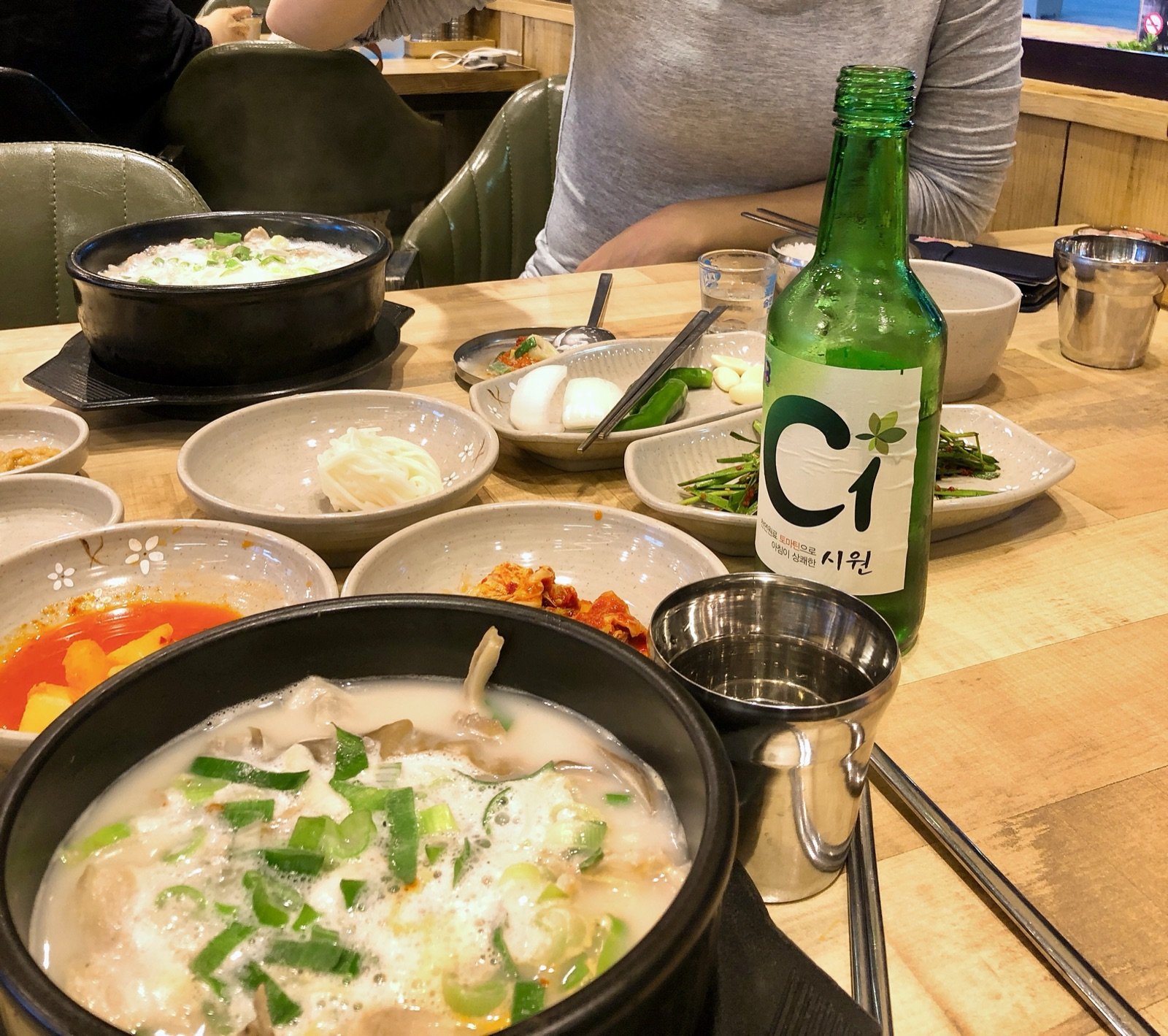
One genuinely useful thing: the alcohol strength changes by product, not just brand. Fresh, original, premium, and export versions all differ, so glance at the number on the front label instead of guessing from the name.
And if straight soju feels too sharp, look for the flavored bottles — grapefruit, green grape, plum. They’re a little sweeter, lower in alcohol, and honestly where a lot of first-timers start. No one will judge you for it.
What ends up on the table: anju
Here’s the word that unlocks everything: anju — food eaten with alcohol. To most Koreans, soju without anju feels unfinished, like a song missing its second half.
The safest first pairing is grilled pork belly, samgyeopsal — or, at a humbler place, a plate of boiled pork (suyuk) with kimchi, raw garlic, and a smear of ssamjang. It’s fatty and salty; the cold soju cuts straight through it and keeps the meal moving.
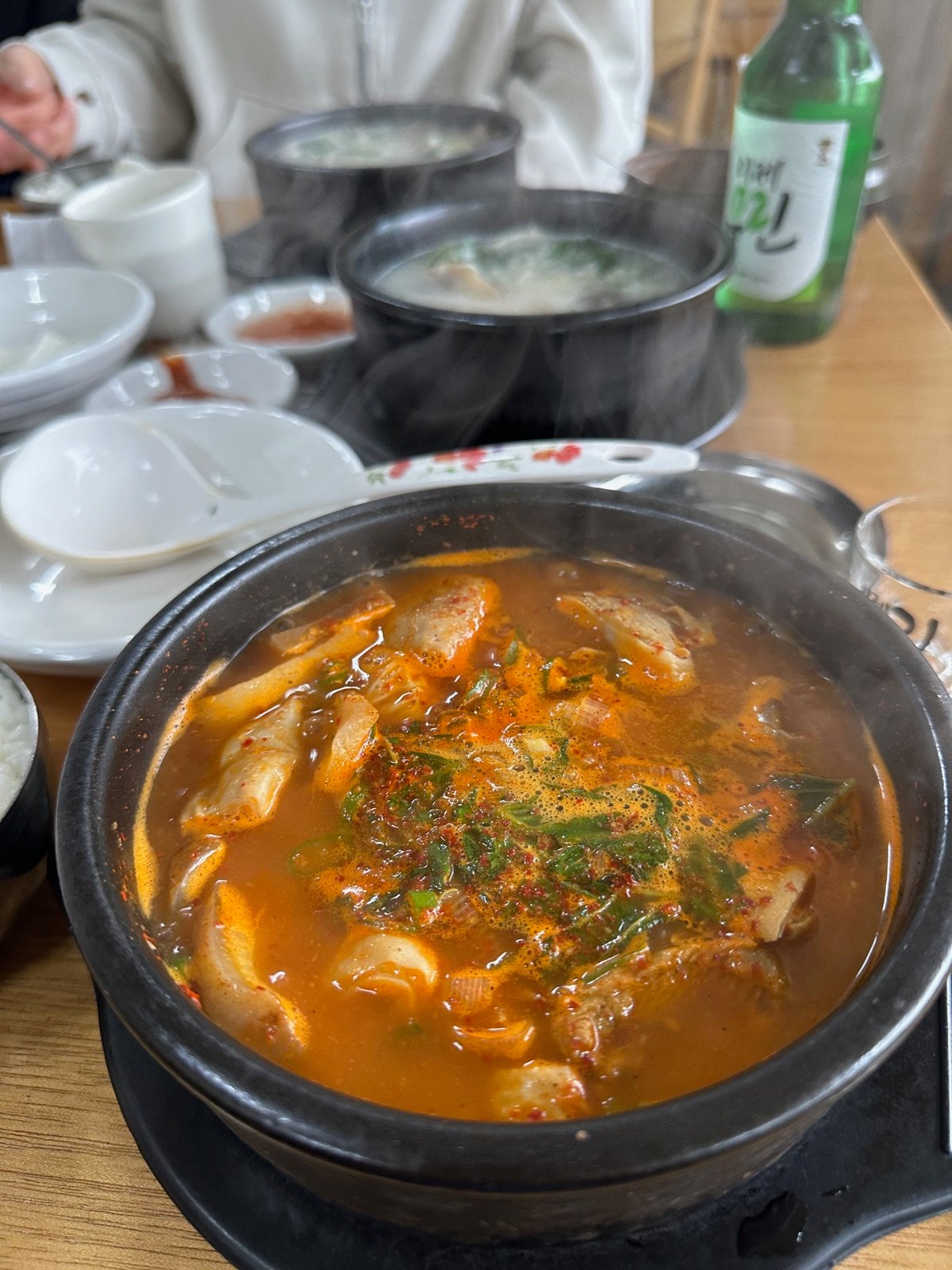
Then there are the spicy soups — kimchi jjigae, budae jjigae, gamjatang, eomuk-tang (fish-cake broth). They stay hot, salty, and endlessly shareable while the bottle slowly empties.
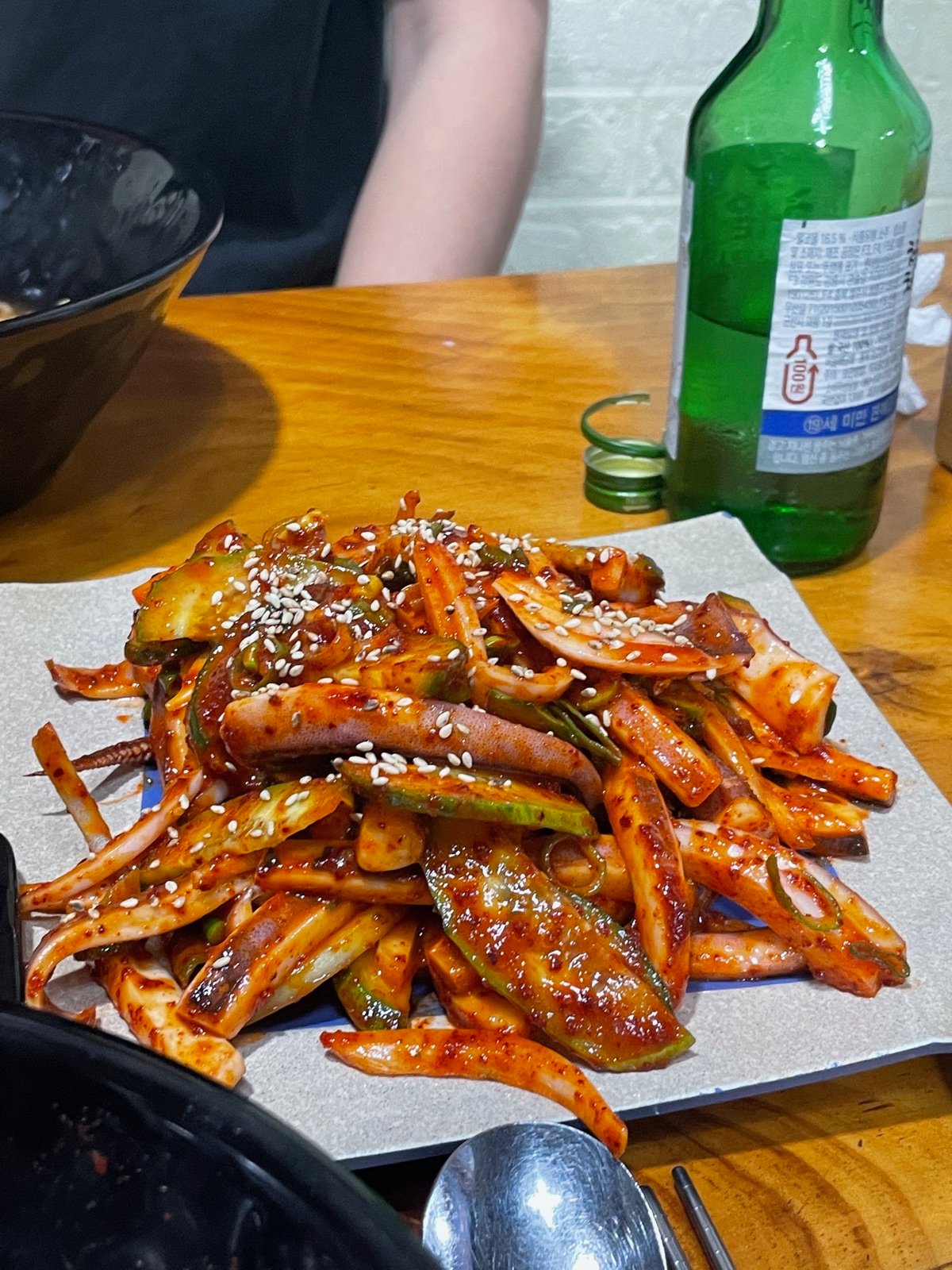
And then there’s the late-night tier, the food you find under those red tents: a plate of ojingeo-muchim (squid tossed in a sweet, spicy, and tangy gochujang sauce), or jokbal, gopchang, golbaengi-muchim. These aren’t polite foods. They’re bold, spicy, chewy — the kind of anju that makes another small pour feel less like a decision and more like the obvious next move.
How to order without looking lost
If the server asks which soju you want, just say “Chamisul” or “Chum-Churum” — at most places that’s plenty. If you only want a bottle:
Soju han byeong juseyo. — “One bottle of soju, please.”
It arrives cold, usually with small glasses (at a street grill, don’t be surprised if it’s paper cups instead — completely normal). A few habits help you blend in: people pour for each other rather than topping up their own glass, and when someone older or more senior pours for you, take it with two hands.
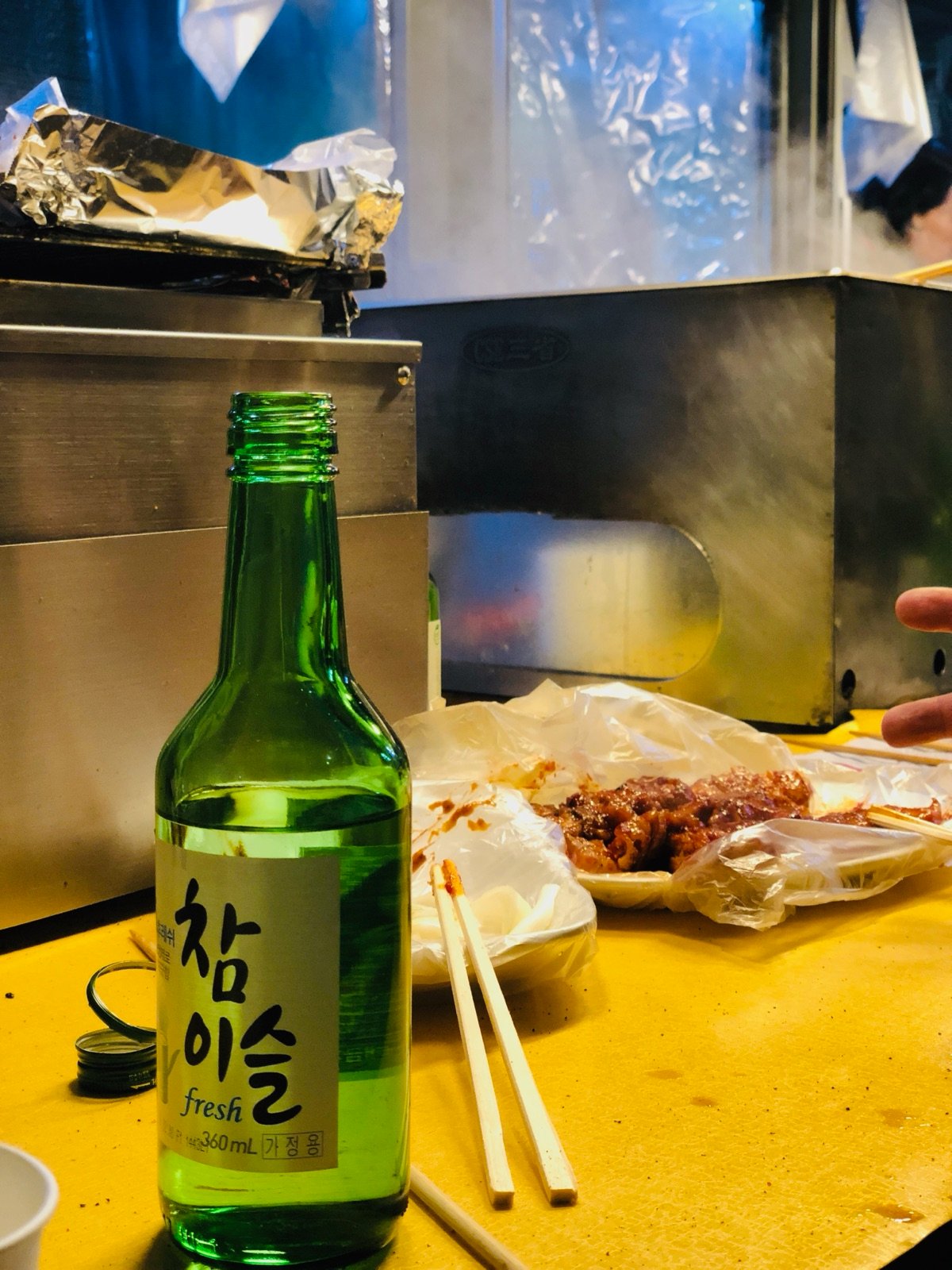
One honest word, since this is a drinking guide. Soju goes down easy, but it’s much stronger than beer, and Korea’s “one more bottle” rhythm sneaks up on you fast. Eat while you drink, pace yourself, and never pressure anyone — drinking slowly, or stopping, is completely normal here. The legal drinking age in Korea is 19.
What to order on your first night
- The classic: samgyeopsal and one common green-bottle soju. Nothing to overthink.
- Warmer and more local: kimchi jjigae or eomuk-tang at a small, worn-in place where the ajumma already knows the regulars.
- The late-night version: find a red pocha tent, order something spicy enough to share, and let the night find its own pace.
Soju is simple on purpose. It’s the table you build around it — and who’s sitting at it with you.
FAQ
Is soju always strong?
No. The alcohol percentage varies by product, so check the bottle label — especially with fresh, original, premium, or export versions.
I don’t usually like strong drinks. What should I try?
A flavored soju — grapefruit, green grape, or plum. Sweeter, lower in alcohol, and easy to share over food.
What’s the easiest food to pair with soju?
Samgyeopsal. It’s common, shareable, and easy to order in almost any Korean BBQ place.
Can I drink soju without food?
You can, but in Korea soju is usually tied to food. For a more local night, order at least one shared dish.
Read next: drink it where it belongs — the night stalls at Gwangjang Market — and when the night runs long, Kakao T gets you home.